
A restroom should never leave a guest guessing where to go. Whether you manage a busy office, welcome families to a church, oversee a school campus, or run a customer-facing business, restroom vinyl wall or door signs offer a clean way to direct people without making the space feel cold, temporary, or overly commercial.
The right sign does more than identify a door. It supports a better experience for visitors, keeps shared spaces organized, and adds a finished touch to a hallway, lobby, or restroom entrance. Matte professional quality vinyl makes that upgrade easier because it delivers the crisp appearance of painted lettering without the paint, labor, odor, or long-term commitment.
Why Vinyl Restroom Signs Work So Well
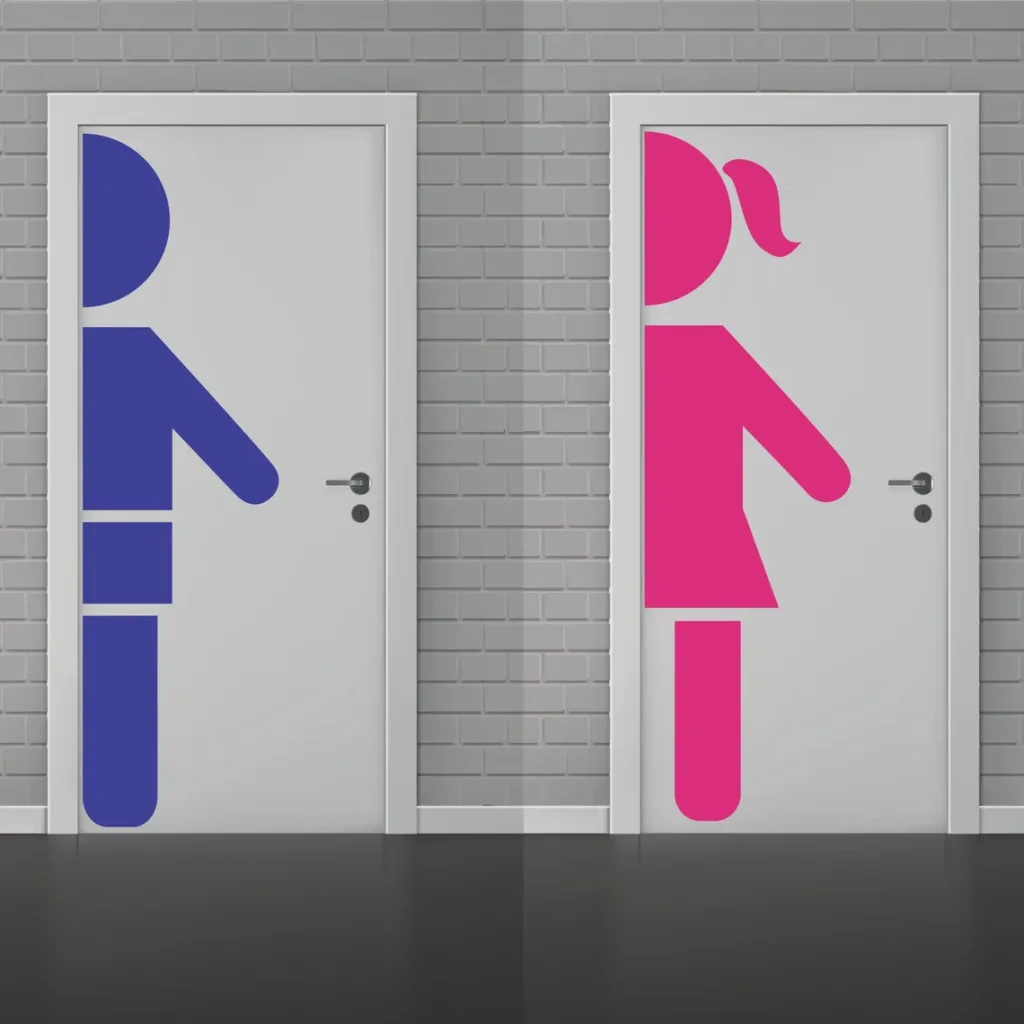
Traditional restroom signage often means drilling into walls, placing a plaque on every door, or hiring someone to stencil and paint lettering. Those options can work, but they are not always practical for spaces that need a quick refresh, rented spaces, a budget-conscious update, or the ability to change their signage later.
Vinyl wall or door decals offer a different path. A well-made matte vinyl sign sits flat against the wall, window or door to create a polished, painted-on look. It can be applied to smooth, clean surfaces with far less disruption than a painted project. For many facilities, that means an upgrade can happen between services, before an event, or during a short office refresh rather than becoming a multi-day maintenance task.
Removability is another major advantage. A business may change its branding. A church may renovate a children’s wing. A school may rearrange rooms or update accessibility language. With removable vinyl, the sign can be changed without treating the wall as a permanent casualty of the update.
That said, vinyl is not a substitute for every type of sign. If a restroom requires tactile characters, Braille, specific mounting heights, or other ADA-compliant features, those requirements should be addressed with the appropriate compliant signage. Vinyl can complement those signs beautifully by adding directional messaging, room names, icons, or branded visual details around them.
Where Restroom Wall Signs Vinyl Makes the Biggest Difference
In a small business, a simple restroom decal can make a hallway or door feel intentional instead of overlooked. Choose a design or lettering that matches the atmosphere of the business: clean and modern for a salon or office, friendly and playful for a boutique, or classic and understated for a café.
For offices, restroom signs should be easy to read at a glance. Employees and visitors should not have to search for a tiny plaque among a row of doors. High-contrast lettering, a clear icon, and consistent placement help people move through the building with confidence. Vinyl also makes it easy to carry brand colors or a subtle logo style into everyday spaces without overdoing it.
Schools benefit from clear visual cues, particularly in larger buildings where students, families, and substitute staff may not know the layout. Vinyl decals can identify restrooms, point visitors toward facilities, or use age-appropriate graphics in elementary settings. Because the material can be removed later, administrators can update a room’s purpose without repainting an entire wall.
Churches often need signage that feels welcoming rather than institutional. Restroom wall decals can coordinate with a church’s existing decor and wayfinding while preserving the warmth of the space. In family areas, a sign can help direct parents to a nursery restroom or changing area. In a multipurpose facility, it can distinguish restrooms from classrooms and storage rooms without creating visual clutter.
Choosing a Sign That Is Clear Before It Is Clever
A restroom sign has one job first: help people find the restroom. Clever phrases and decorative flourishes can add personality, but they should never slow down comprehension. The most effective designs use straightforward wording, familiar icons, and a layout that can be read from a reasonable distance.
Start by considering who uses the space. A professional office may prefer simple “Restroom” lettering with a clean silhouette. A family restaurant may need clearly marked men’s, women’s, and family restroom options. A school may use larger lettering and friendly icons that younger children can recognize. The setting determines the style, but clarity should remain consistent.
Color contrast matters more than many buyers expect. Light lettering on a light wall can disappear, especially in dim hallways. Dark vinyl on a pale wall, or light vinyl on a darker painted surface, creates the strongest result. If your wall has texture, uneven paint, or decorative paneling, test placement carefully. Vinyl adheres best to a smooth, clean, fully cured painted surface. We include a free practice decal and professional application tool with every order of our restroom door and wall decals to make sure the installation is a successful easy project.
Size is equally important. A decal that looks generous on a computer screen may feel too small once placed above a door or at the end of a corridor. Measure the available wall space and think about viewing distance. For directional signs, larger lettering is usually worth it. Guests should be able to orient themselves before they reach the door.
Keep the Visual System Consistent
If your facility has more than one restroom, avoid treating each sign as a separate decorating project. Use the same font family, icon style, color palette, and general placement throughout the building. Consistency makes the property easier to navigate and makes the entire space feel more professionally maintained.
This does not mean every decal must be identical. A children’s restroom can use a softer, more playful version of the same visual system. A staff-only restroom can be more discreet. The shared details should still make it obvious that the signs belong together.
Custom Vinyl Signs Solve the Awkward-Space Problem
Ready-made restroom decals are a great choice when the message is simple and the space follows a standard layout. Custom vinyl is especially helpful when your building has an unusual need: a unisex restroom, a private restroom, a changing station, a restroom down a side hallway, or a sign that needs to match existing brand standards.
Custom options also give organizations more control over scale. A narrow wall beside a door might require vertically stacked lettering. A wide lobby wall may call for a larger directional message with an arrow. Rather than forcing a generic sign into the available space, a custom design can be built around the actual wall dimensions and viewing angle.
For churches, schools, and businesses with logos or established colors, custom signage keeps practical wayfinding connected to the larger environment. A guest may not consciously notice that the restroom sign matches the reception wall or classroom labels, but the overall experience feels more organized. Contact us with your specific design requirements for a custom design quote and sketch.
The Simple Stencil can help turn a logo, phrase, or signage idea into a custom vinyl decal, which is particularly useful when a standard restroom label does not fit the space or the message you need.
Installation Details That Protect the Finished Look
Vinyl installation is straightforward, but a few careful steps make a visible difference. Start with a clean wall free of dust, grease, and residue. Freshly painted walls need adequate curing time before any decal is applied, since paint that is still releasing moisture can affect adhesion.
Before removing the backing, use painter’s tape to position the decal. Step back and view it from the approach path, not just from arm’s length. This is the moment to check whether the sign is level, centered, and easy to spot. A decal can be perfectly straight and still feel misplaced if it is too high, too low, or hidden by an open door.
Apply the decal slowly and use a squeegee or application tool to press it into place. Work from the center outward to reduce air bubbles. Matte-finish vinyl is especially effective for wall messaging because it minimizes glare and helps the lettering appear more like painted design than a shiny sticker.
For best long-term results, avoid placing decals on heavily textured surfaces, peeling paint, or walls with ongoing moisture problems. A restroom door, nearby hallway wall, or dry interior wall is often a better location than a surface exposed to frequent steam or excessive sun exposure outdoors.
A Small Sign Can Make a Space Feel Cared For
Restroom signage is easy to treat as an afterthought, but guests notice when it is confusing, outdated, or mismatched. A vinyl decal creates order without adding renovation-level cost or disruption. It tells visitors that the details of their experience matter, even in the spaces they only use for a few minutes.
Choose a design that people can read quickly, place it where it will be seen, and let it support the tone of the environment you have worked hard to create. When you are ready to replace generic labels with signage that fits your space, explore custom and ready-made vinyl wall decal options from The Simple Stencil.







Leave a Reply