
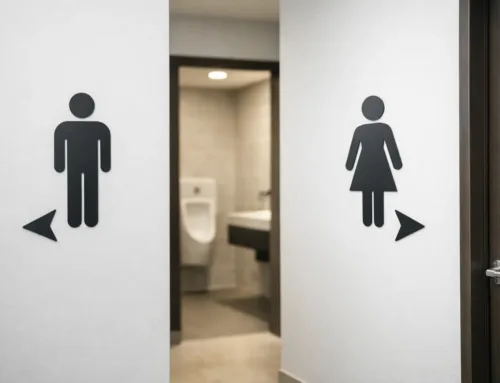
A guest should not have to scan the entire dining room to find the restroom or wonder which door is appropriate to use. Restaurant restroom decals solve that small but meaningful friction point with clear, polished signage that feels like part of the space, not an afterthought taped to the wall.
For independent restaurants, cafes, breweries, food halls, and quick-service locations, restroom signage does more than point the way. It supports accessibility, protects privacy, reinforces cleanliness expectations, and gives guests one more signal that the business pays attention to details. Vinyl decals offer a practical way to accomplish all of that without committing to permanent paint or bulky sign hardware. If you already know what you need, you can browse our restroom and wayfinding decals here.
Why Restaurant Restroom Decals Matter
The restroom is often one of the few spaces every guest sees up close. A clean, well-marked entrance makes the experience easier from the start. An unclear door, a peeling paper sign, or a label that clashes with the rest of the interior can make an otherwise thoughtful restaurant feel less finished.
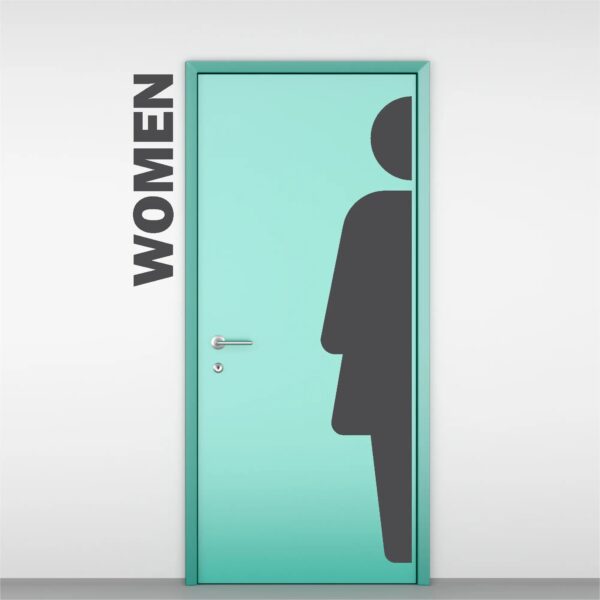
Decals are especially useful when the restroom entrance is tucked down a hallway, located near a kitchen door, or positioned in a shared commercial space. A simple restroom label on the door may be enough in a compact dining room. In a larger layout, wall decals can create a clear visual path from the main floor to the restroom area.
They also give owners and managers more flexibility than painted lettering. If your layout changes, you add a family restroom, update a policy, or refresh your brand colors, removable vinyl can be replaced without turning a routine update into a renovation project.
Choose Signs for the Way Guests Actually Move
Effective restroom signage starts with movement, not decoration. Stand near your entrance, host stand, bar, and dining area. From each spot, ask whether a first-time guest can identify the restroom route in a few seconds. If the answer is no, consider a directional arrow decal before the hallway, followed by a door decal at the destination.
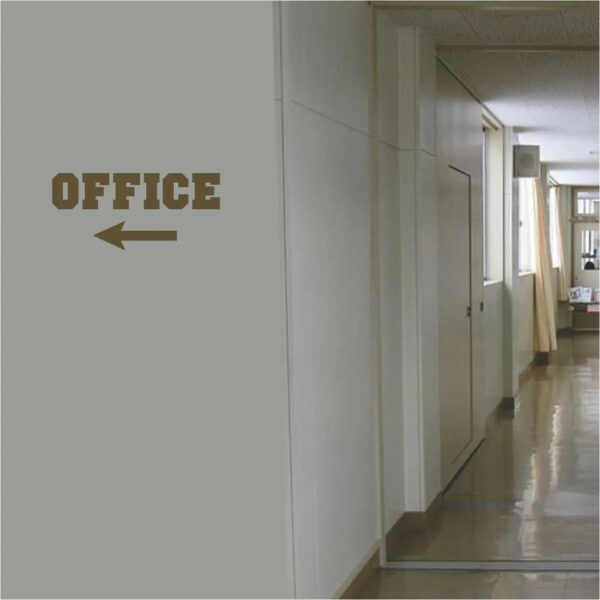
The wording should be direct. “Restrooms,” “Restroom,” and “All-Gender Restroom” are easy to understand at a glance. Arrows work well when the route is not obvious. A separate “Employees Only” decal can help distinguish service doors from guest facilities, particularly in tighter back-of-house corridors. If you offer a single-occupancy or family space, an All-Gender Restroom decal or Family Restroom decal makes it clear who the room is for.
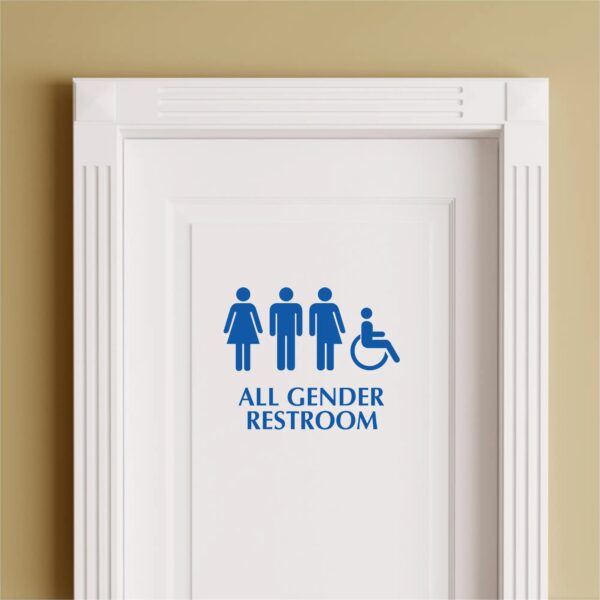
For facilities that need accessible restroom identification, make sure the sign plan supports applicable local requirements. Vinyl lettering can complement required signage, but it may not replace tactile, Braille, mounting-height, or other code-specific elements. It depends on your jurisdiction and the type of sign required. When compliance is involved, confirm the details with your local building authority or signage professional before ordering.
Keep the design readable from a distance
A restroom decal does not need a large paragraph to be useful. High contrast, legible type, and sensible sizing matter more than decorative complexity. A light decal on a dark painted door or a dark decal on a light wall usually gives the clearest result.
Script fonts can be beautiful for a restaurant name or wall quote, but restroom identification benefits from clean lettering. If your brand has a distinctive look, use that personality in a border, icon style, or secondary message while keeping the main label easy to read. Guests should not have to decode the design.
Match the Decal to Your Restaurant’s Personality
Practical signs can still feel intentional. A modern coffee shop may prefer simple lowercase lettering. A neighborhood pizza restaurant might use a friendly, bold typeface. A refined dining room may choose understated serif lettering that matches its menu and exterior identity.
The strongest approach is usually consistent, not overly themed. Repeat the same color family, type style, or graphic language used on menus, wall art, table tents, and other guest-facing materials. This makes even a small directional label feel connected to the overall brand experience.
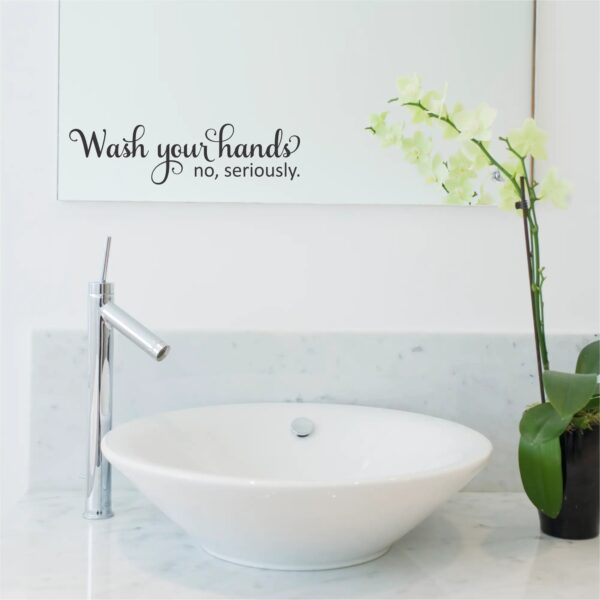
There is room for warmth, too. A short message near the sink area can reinforce the tone of your business, such as a courteous handwashing reminder or a lighthearted note like our “Wash your hands. No, seriously.” decal. Keep these messages brief and place them where they will not compete with essential directions. Humor can be memorable, but it should never make the restroom rules less clear.
Where Vinyl Decals Make the Most Sense
Restaurant restroom decals are not limited to the door itself. Smooth painted walls, sealed doors, mirrors, windows, and many clean, flat surfaces can all create useful placement opportunities. The right location depends on visibility, traffic flow, and surface condition.
Door decals are the most common choice because they clearly identify the room at the point of entry. Wall decals are helpful for directional arrows, especially around corners or near hallways. Window decals can work well on glass partitions or entry doors when a restaurant shares a building with other tenants.
Before installation, look closely at the surface. Fresh paint needs adequate curing time, and heavily textured walls may not give vinyl the crisp, secure finish you want. Grease, dust, moisture, and cleaning residue can also affect adhesion. In restaurant settings, proper surface preparation is not a minor step. Wipe the area clean, let it dry completely, and follow the application instructions carefully. Not sure how your surface will hold up? Our $1 color sample pack includes a working test decal you can try first.
Think about cleaning routines
Restroom areas are cleaned frequently, so the decal material should look polished without demanding special treatment. Matte-finish vinyl is often a smart choice because it resembles painted lettering and avoids the glare that can make glossy signs harder to read under bright lighting.
Ask staff to avoid harsh scrubbing directly over decal edges. Gentle cleaning around the design helps preserve a neat appearance. If a decal eventually needs to be changed, removable vinyl offers a cleaner path than sanding, repainting, or replacing a door panel.
Custom Decals Solve the Awkward-Space Problem
Ready-made restroom designs are ideal when you need a straightforward, fast solution. Custom decals become especially valuable when your restaurant has an unusual floor plan, a defined brand style, multiple restroom types, or a need for bilingual messaging.
A custom set can include restroom names, arrows, suite numbers, employee-only labels, pickup-area directions, and brand elements that all use the same visual system. That consistency is useful for restaurants opening a new location or updating several areas at once. It also helps growing businesses avoid the pieced-together look that happens when signs are ordered from different sources over time.
The Simple Stencil can help turn a logo, phrase, or signage concept into premium vinyl lettering sized for your actual walls and doors, or custom name decals for any door in the building. A design consultation is particularly helpful when you know what the sign needs to say but are unsure about dimensions, layout, or color contrast.
When sending a custom request, include a photo of the installation area, approximate measurements, the color of the wall or door, and any existing brand materials. Those details make it easier to choose a decal size that looks balanced rather than too small to notice or too large for the space. If you want to see colors in person before you commit, order color samples and hold them up against your actual surface.
Need a custom design, a specific color, or a size you don’t see listed? Contact us here and we’ll help you work out the details. Some of our best designs start with a customer’s idea.
Avoid the Common Signage Shortcuts
Temporary paper signs may get the job done for a weekend, but they rarely support a professional guest experience. They curl at the corners, fade, and can leave tape residue behind. Oversized novelty graphics can create the opposite problem: guests notice the joke but miss the actual restroom entrance.
Another common mistake is placing a decal only where staff can see it. A sign behind the host stand or around a corner may make sense to someone who works there every day, but not to a guest arriving for the first time. Walk the path from the guest perspective before finalizing placement.
Finally, avoid treating restroom decals as a one-time detail. Review them during seasonal refreshes, rebrands, and facility maintenance checks. A sign that is clean, current, and easy to read quietly supports the standard you want guests to associate with your restaurant.
Quick Restroom Signage Checklist
- Walk the route from the front door, host stand, and bar. Can a first-time guest find the restroom in a few seconds?
- Add a directional arrow anywhere the route turns or disappears from view.
- Label every door guests might confuse with the restroom, including “Employees Only” doors.
- Choose high-contrast colors and clean lettering for the main label.
- Check local requirements for accessible signage before ordering.
- Clean and dry the surface fully before installing.
A well-placed decal may only take a moment to notice, but it can make the entire visit feel more considered. Start with the route your guests take, choose messaging that is easy to understand, and let the finished signage reflect the same care you put into every table, plate, and welcome.
Ready to create clear, polished restroom signage for your restaurant? Shop our restroom and wayfinding decals, or contact The Simple Stencil for a custom design, color help, or special sizing.






Leave A Comment
You must be logged in to post a comment.